Introduction
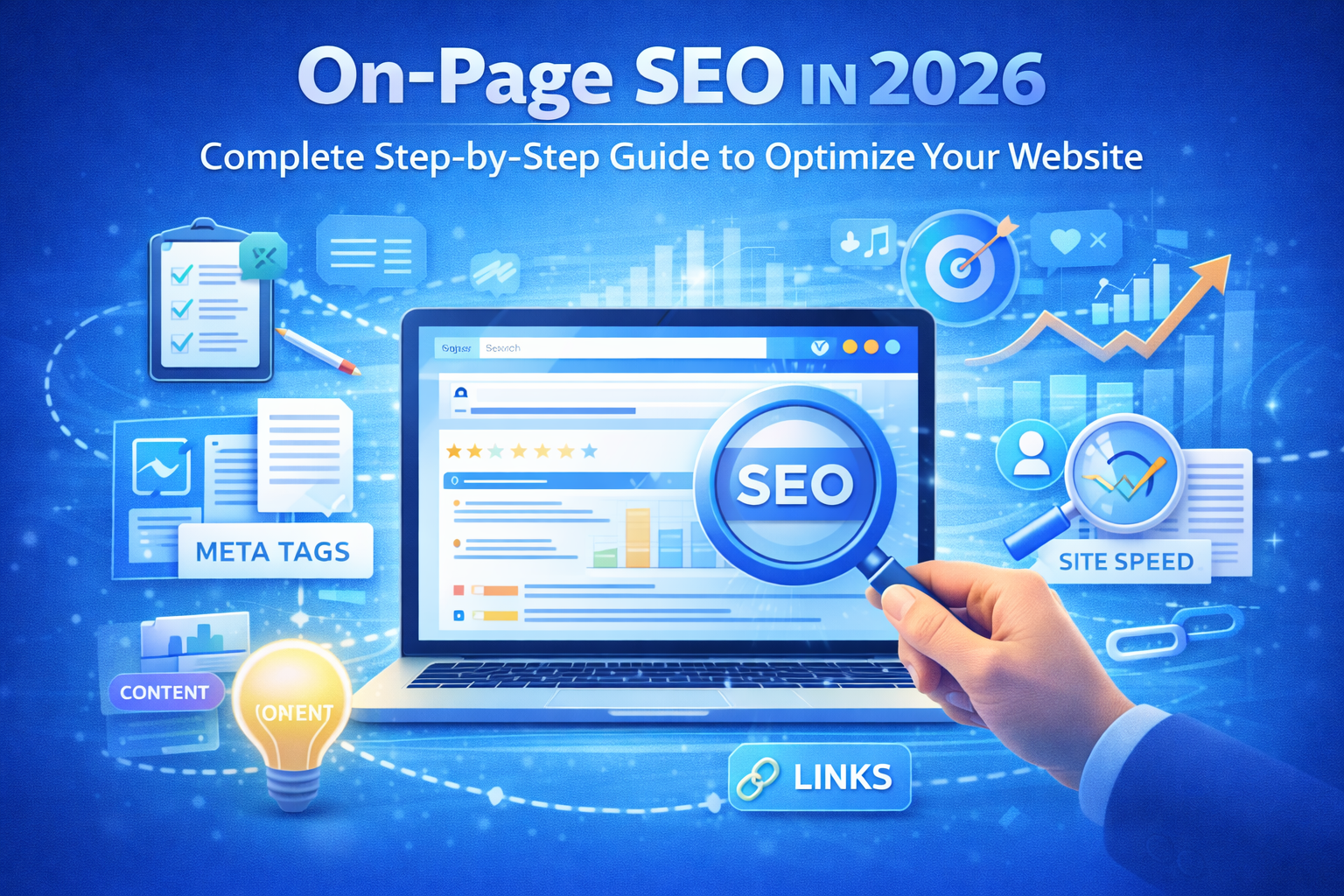
On Page SEO is the process of optimizing individual web pages to improve search engine rankings and user experience in 2026.
On Page SEO helps search engines understand your website content better.In today’s digital world, just having a website is not enough. If your website does not appear on Google, your potential customers will never find you. This is where On-Page SEO plays a very important role. On-page SEO helps search engines understand your content and show it to the right audience.
On Page SEO helps search engines understand your website content better.
Whether you are a business owner, student, freelancer, or digital marketer, learning on-page SEO is essential. In this blog, you will learn what on-page SEO is, why it is important, and how to do on-page SEO step by step in 2026.
A strong On Page SEO strategy improves rankings, traffic, and user experience.
What is On-Page SEO?
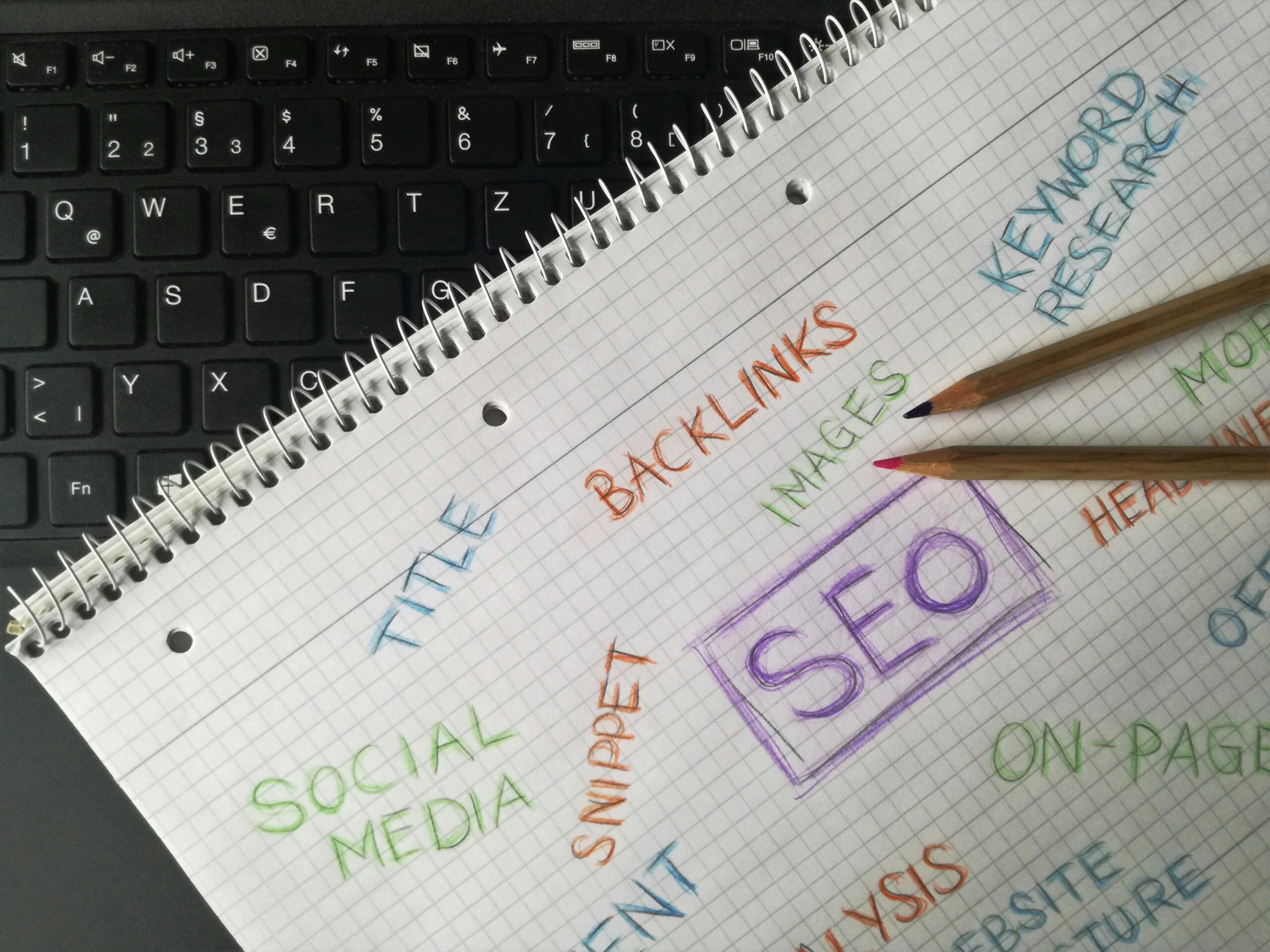
On-page SEO refers to the optimization of individual web pages to improve their search engine rankings and attract organic traffic. It includes optimizing:
Read our complete Off Page SEO guide here
- Content
- Title tags
- Meta descriptions
- Headings
- Images
- URLs
- Internal links
- User experience
- In simple words, on-page SEO means optimizing everything inside your website.
Why On Page SEO is Important in 2026
On-page SEO is the foundation of your entire SEO strategy. Without it, even the best backlinks will not work properly. goggle developres
Benefits of On-Page SEO:
- Higher Google Rankings – Your page ranks better on search results
- More Organic Traffic – Free visitors from search engines
- Better User Experience – Easy navigation, readable content
- Higher Conversion Rate – More visitors become customers
- Better Understanding by Google – Google easily understands your content
How On-Page SEO Works
Search engines like Google analyze your content to understand:
- What your page is about
- How helpful it is
- Whether users like it or not
On-page SEO helps Google by:
- Using correct keywords
- Structuring content properly
- Adding relevant links
- Improving readability
Key Elements of On-Page SEO
Let’s now understand each element in detail.
1. Keyword Research – The First Step
Before writing any content, you must find the right keywords. Keywords are the words people type in Google.
Example Keywords:
- on-page SEO
- on-page SEO techniques
- on-page SEO checklist
- on-page SEO for beginners
Tools for Keyword Research:
- Google Keyword Planner
- Ubersuggest
- Ahrefs
- SEMrush
- Google Search Suggestions
Tips:
- Choose keywords with good search volume
- Avoid very high competition keywords
- Focus on long-tail keywords for faster ranking
2. SEO-Friendly Title Tag
The title tag is the main heading that appears on Google search results. It is one of the most important on-page SEO factors.
A strong On Page SEO strategy improves rankings, traffic, and user experience.
Best Practices:
- Include your main keyword
- Keep it under 60 characters
- Make it attractive and clickable
3. Meta Description Optimization
Meta description is the short text shown below the title on Google. It does not directly affect ranking, but it improves click-through rate.
Best Practices:
- 140–160 characters
- Include keyword
- Add a call to action
4. URL Optimization
Your URL should be short, clean, and keyword-rich.
Bad URL:
www.website.com/page123?id=456
Good URL:
www.website.com/on-page-seo-guide
5. Heading Tags (H1, H2, H3)
Headings help users and search engines understand your content structure.
Rules:
- Use H1 only once (main title)
- Use H2 for subheadings
- Use H3 inside H2 sections
Include keywords naturally in headings.
6. High-Quality Content (Most Important Part)
Content is the heart of on-page SEO. Google loves content that is:
- Helpful
- Original
- Easy to read
- Well-structured
Content Tips:
- Write for humans, not only for Google
- Solve user problems
- Use simple language
- Avoid copy-paste content
- Update content regularly
Ideal Length:
- Minimum 1000 words
- Best: 1500–2000 words for competitive topics
7. Keyword Placement Strategy
Use your main keyword in:
- First 100 words
- One H2 heading
- Meta description
- URL
- Image ALT text
Do not overuse keywords. Keep it natural.
8. Image Optimization
Images make your content attractive, but they must be optimize
How to Optimize Images:
- Rename image file before upload
- Add ALT text
- Compress image size
- Use relevant images only
9. Internal Linking
Internal links connect one page of your website to another.
Benefits:
- Improves user navigation
- Helps Google crawl your site
- Increases page authority
Example:
Link your on-page SEO blog to:
- SEO services page
- Contact page
- Another related blog
10. External Linking
External links are links to other trusted websites.
A strong On Page SEO strategy improves rankings, traffic, and user experience.On Page SEO helps search engines understand your website content better.
Read our complete Off Page SEO guide here
Why Important:
- Builds trust
- Improves content value
- Shows credibility
Tip:
Link only to high authority websites like Google, HubSpot, Moz, etc.
11. Mobile-Friendly Design
Most users browse on mobile. Google also uses mobile-first indexing.
Make Sure:
- Website is responsive
- Text is readable on mobile
- Buttons are clickable
Use Google Mobile-Friendly Test tool On Page SEO helps search engines understand your website content better.
What is on-page SEO?
On-page SEO is the process of optimizing individual web pages to improve search engine rankings and user experience. It includes content optimization, meta tags, internal links, URL structure, and page speed.
Why is on-page SEO important in 2026?
In 2026, Google prioritizes user intent, content quality,
This On Page SEO guide is useful for beginners and digital marketers in 2026.