Introduction
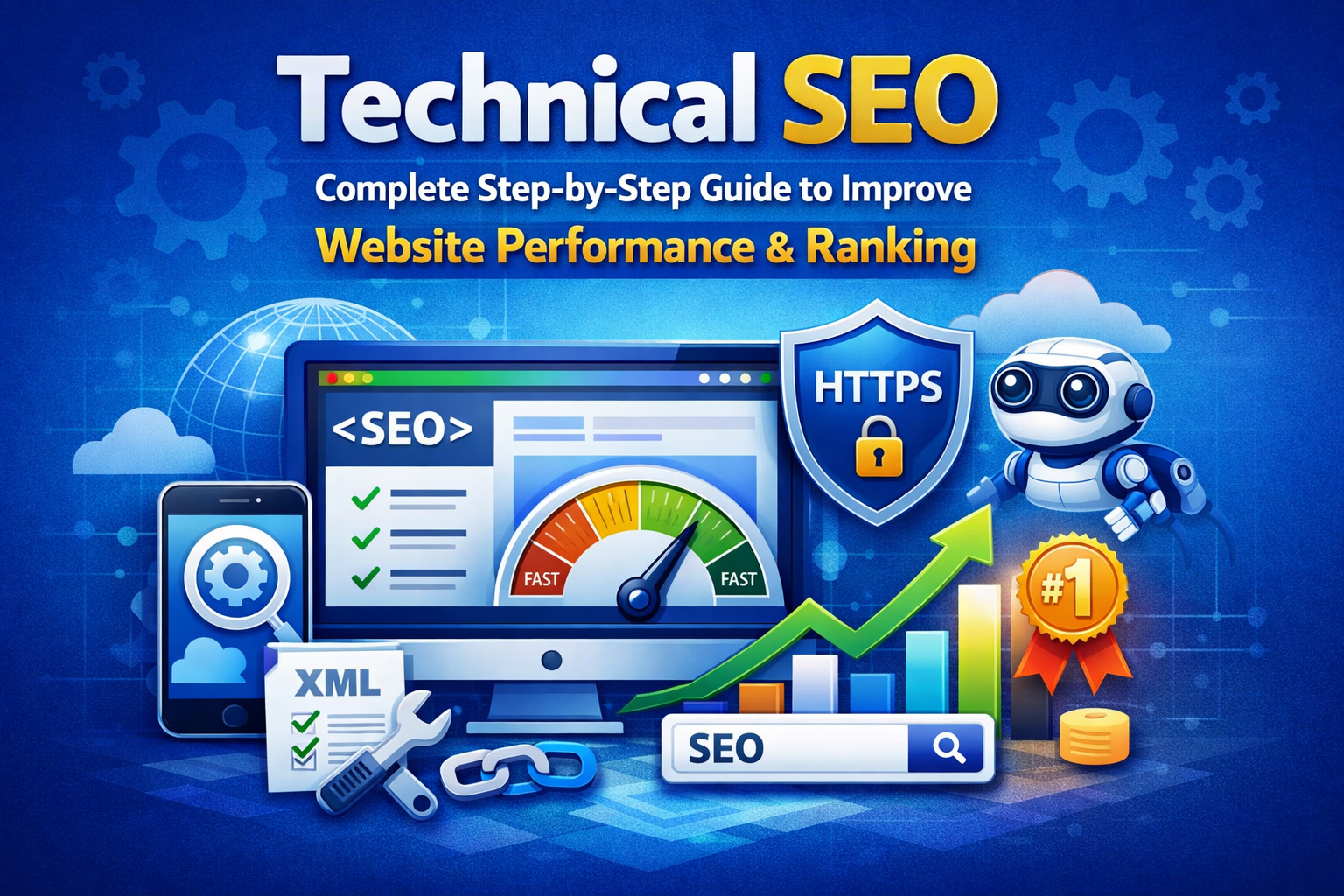
Technical SEO is one of the most important parts of search engine optimization. Even if you create great content and build strong backlinks, your website may still fail to rank if technical SEO is weak.
Technical SEO focuses on improving website structure, speed, crawlability, indexing, and user experience so search engines can easily understand and rank your website.→ https://pagespeed.web.dev/
In this complete guide, you’ll learn what technical SEO is, why it matters, and how to optimize your website step by step to improve rankings and Rank Math SEO score.
Technical SEO improves rankings by helping search engines crawl and index pages efficiently. When your website is fast, secure, and mobile-friendly, search engines trust it more and rank it higher.
- technical optimization
- website technical setup
- SEO technical improvements
- backend SEO
- site performance optimization
What Is Technical SEO?
Technical SEO refers to optimizing the technical elements of a website that affect search engine crawling, indexing, and ranking.
Technical SEO refers to optimizing the technical elements of a website that affect search performance.
Unlike on-page SEO and off-page SEO, this technical optimization works behind the scenes.
It is one of the most important parts of search engine optimization because it helps improve website performance and rankings.
These backend improvements help search engines crawl and index pages efficientlyIf you are new to SEO, start with our complete Keyword Research guide to find the best search terms for your website.
Technical SEO helps:
- Search engines crawl your website
- Pages get indexed properly
- Website load faster
- Improve mobile usability
- Increase user experience
Why Technical SEO Is Important
1.Improves Google Crawling & Indexing
Search engines can easily crawl your pages without errors.
2.Boosts Website Speed
Fast-loading websites rank higher and reduce bounce rate.
3. Enhances User Experience
Smooth navigation improves engagement and conversions.
4.. Improves Search Rankings
Optimized technical structure supports content visibility.
5.Increases Rank Math SEO Score
Correct technical setup increases on-page SEO signals.
- technical optimization
- website technical setup
- SEO technical improvements
- backend SEO
- site performance optimization
Key Elements of Technical SEO
1.Website Crawling & Indexing
Search engines use bots to crawl and index pages.→ https://pagespeed.web.dev/
How to Improve Crawling:
- Submit XML sitemap
- Use proper internal linking
- Fix crawl errors in Google Search Console
2.XML Sitemap Optimization
An XML sitemap helps search engines find your pages easily.
Best Practices:
- Submit sitemap in Google Search Console
- Include only important URLs
- Remove duplicate and noindex pages
3.Robots.txt File Optimization
Robots.txt controls which pages search engines can crawl.
Best Practices:
- Allow important pages
- Block admin, login, and duplicate URLs
- Add sitemap URL inside robots.txt
User-agent: *
Disallow: /wp-admin/
Allow: /wp-admin/admin-ajax.php
Sitemap: https://yourwebsite.com/sitemap_index.xml
technical optimization
website technical setup
SEO technical improvements
backend SEO
site performance optimization
4.Website Speed Optimization
Website speed is a confirmed ranking factor.
How to Improve Speed:
- Compress images
- Enable caching
- Minify CSS and JavaScript
- Use a CDN
Tools to Test Speed:
- Google PageSpeed Insights
- GTmetrix
5.Mobile-Friendly Optimization
Google uses mobile-first indexing, meaning it checks mobile version first
Mobile SEO Tips:
- Responsive design
- Readable fonts
- Clickable buttons
- Fast mobile loading speed
Test using Google’s Mobile-Friendly Test.
6.HTTPS & Website Security
Secure websites build trust and rank better.
Best Practices:
- Install SSL certificate
- Redirect HTTP to HTTPS
- Avoid mixed content errorsInstall SSL certificate
7.Fix Duplicate Content Issues
Duplicate content confuses search engines.
How to Fix:
- Use canonical tags
- Avoid URL variations
- Noindex thin pages
8. URL Structure Optimization
URL Structure Optimization
Good URL Example:
/technical-seo-guide/
Avoid:
- Long URLs
- Special characters
- Random numbers
9.Structured Data (Schema Markup)
Schema markup helps search engines understand content better.
Benefits:
- Rich snippets
- Higher CTR
- Better visibility
Common schemas:
- Article
- FAQ
- Breadcrumb
- Organization
- technical optimization
- website technical setup
- SEO technical improvements
- backend SEO
- site performance optimization
Rank Math plugin makes schema implementation easy.
10.Core Web Vitals Optimization
Core Web Vitals measure user experience.
Key Metrics:
- LCP (Largest Contentful Paint)
- CLS (Cumulative Layout Shift)
- INP (Interaction to Next Paint)
How to Improve:
- Optimize images
- Reduce layout shifts
- Improve server response time
What does technical SEO include?
Technical SEO includes website speed optimization, mobile-friendliness, secure HTTPS setup, crawlability improvements, XML sitemap creation, and fixing broken links.
Is technical SEO required for ranking?
Yes, without proper technical SEO, search engines may struggle to crawl and index your website, which can hurt rankings.
How often should I do a technical SEO audit?
You should perform a technical SEO audit every few months to fix errors and maintain performance.
- technical optimization
- website technical setup
- SEO technical improvements
- backend SEO
- site performance optimization
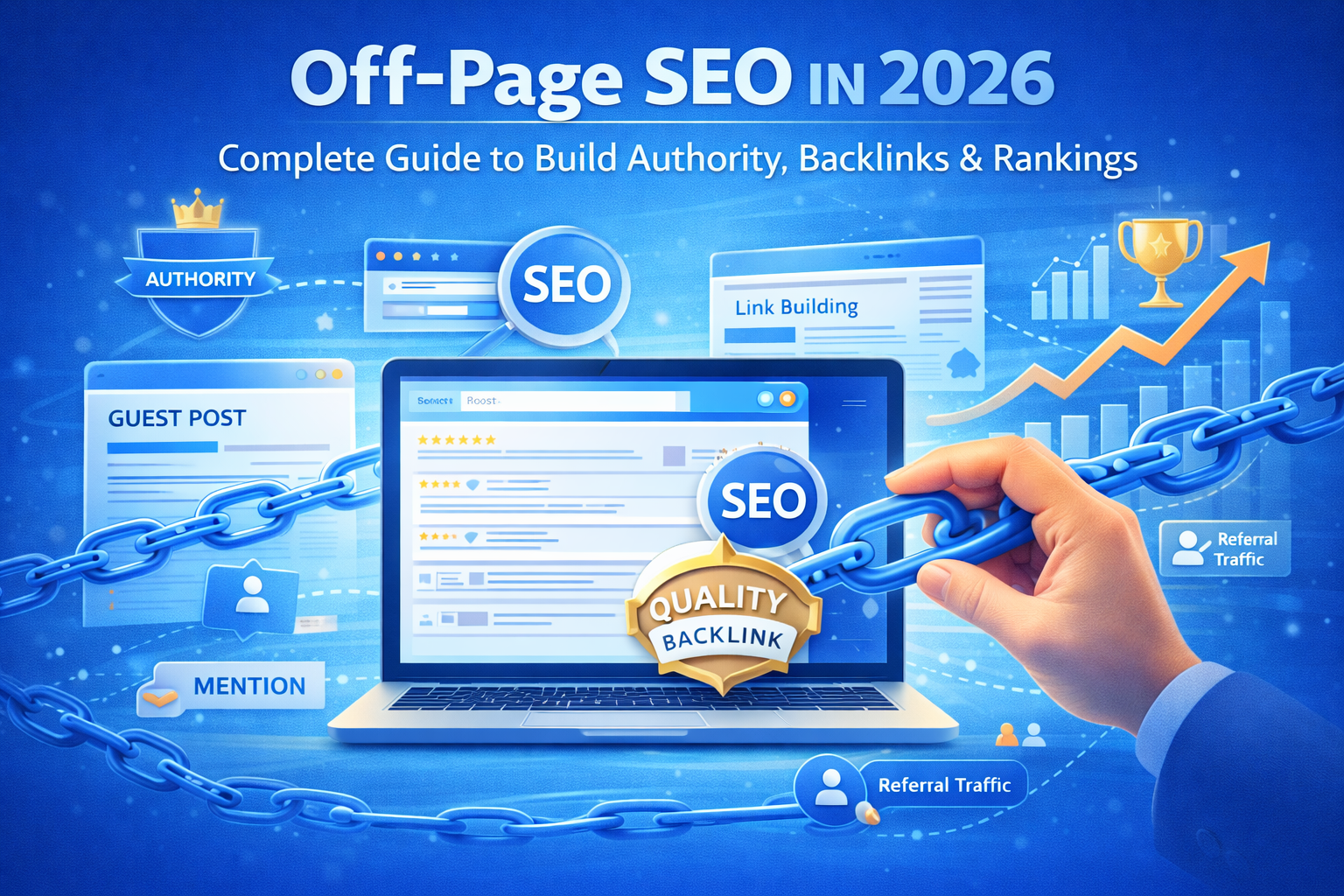
Building authority is also important, so check our Off-Page SEO strategy guide
Technical SEO helps improve website performance, crawlability, indexing, and rankings. Learn step-by-step technical optimization techniques.off-page-seo-backlinks-2026.png